
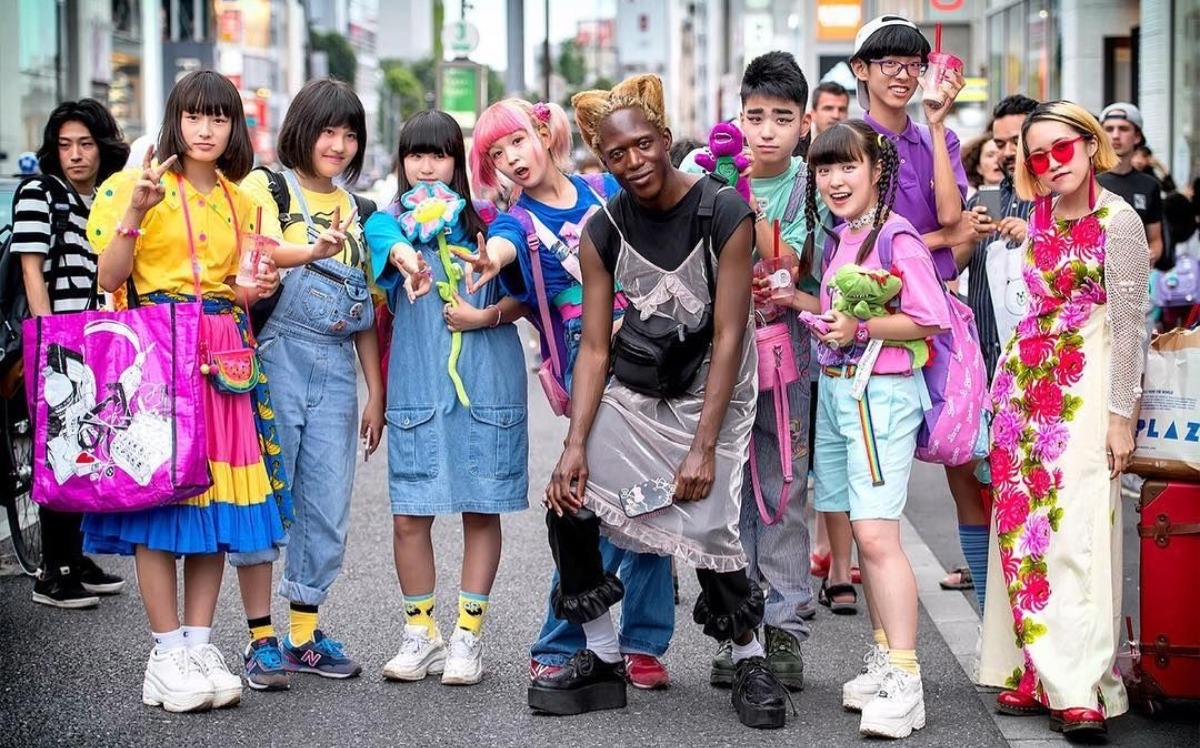
You’ve seen the photo. Everyone has, even people who couldn’t tell you where it’s actually from. A kid standing on some narrow Tokyo street, clashing patterns everywhere, hair pinned with a dozen plastic clips, platform boots, a backpack covered in charms. That’s Harajuku. Or at least it’s the version that made it into Western magazines twenty-odd years ago and never really left.
But the real story’s a lot bigger than one image that went around the internet forever. And it’s still going, honestly, just not quite how most people picture it. So here’s the short version: where Harajuku fashion actually came from, the subcultures that put the neighborhood on the map, and where things stand now. Because the district in 2026 looks pretty different from the one FRUiTS magazine was photographing back in the day.
What Is Harajuku Fashion, Actually?
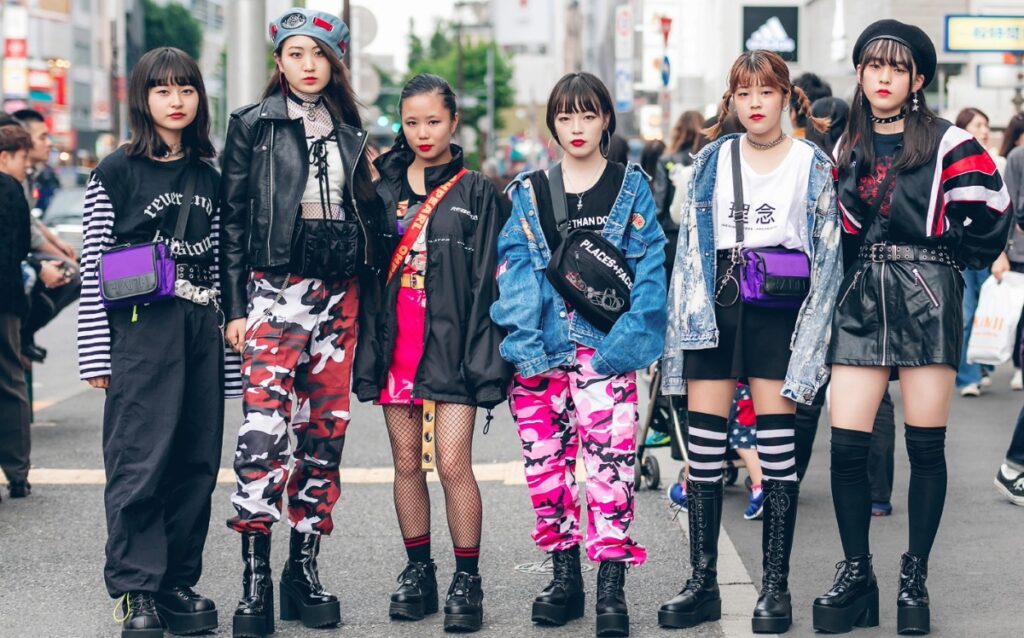
People get this wrong all the time. Harajuku fashion isn’t one look. It’s an umbrella term for a whole family of Japanese street subcultures that all came out of the same small neighborhood in Shibuya, Tokyo. Lolita, Decora, Gyaru, Visual Kei, Fairy Kei, a handful of smaller offshoots too, all fall under that umbrella. And visually? They barely look related. Put a Lolita dress next to a Visual Kei outfit and you’d swear they came from two completely different planets.
What actually holds it together is an attitude, not a silhouette. Extreme individuality. DIY construction. A pretty blunt disregard for the kind of conformity Japanese dress norms have historically rewarded. Each subculture built its own palette, its own accessories, its own unwritten rules. But underneath all of it sits the same basic instinct: get dressed like you’re not waiting for anyone’s permission first.
A Short History of Harajuku Fashion
The roots go back further than you’d think. It starts with the postwar American occupation, when the neighborhood sat near a US military base and Western pop culture started leaking in. Young Japanese people picked that up fast and immediately started twisting it into something of their own, rather than just copying it wholesale.
By the 1970s, Harajuku had basically become Tokyo’s temple of rock and avant-garde style. And the subculture scene most people associate with the name today really took shape through the 1980s. Sundays were the big deal here. Omotesando, the wide avenue running through the neighborhood, would close to traffic for a pedestrian zone, and kids gathered there in handmade, elaborate outfits that worked as much like performance art as actual clothing. Then the 1990s hit, and that’s when the subcultures that made Harajuku famous worldwide actually locked in. Gothic Lolita. Sweet Lolita. Decora. Kogal, which was really the early form of what became Gyaru. All of it crystallized in that one decade.
Global recognition arrived in 1997, when photographer Shoichi Aoki launched FRUiTS magazine and started documenting outfits on Takeshita Street. That mattered more than it sounds like on paper, too. It gave the whole scene a shared visual record to actually respond to, and it handed international editors a steady stream of images to run. By the early 2000s, Harajuku had become the reference point for “Tokyo cool” in Vogue, the BBC, CNN, you name it, and the kawaii fashion economy it helped build eventually got valued at over $40 billion globally.
Then it slowed down. The Sunday pedestrian closures that hosted the whole ritual ended in 1998, which quietly pulled the rug out from under the scene’s main gathering spot. Smartphones did more damage later on, since a lot of that identity performance that used to require standing on an actual street corner could just happen online instead. Fast fashion brands copied the visual elements without much of the subcultural context attached to them. By the 2010s, the original scene had thinned out a lot from where it peaked in the mid-2000s.
The Role of Takeshita Street
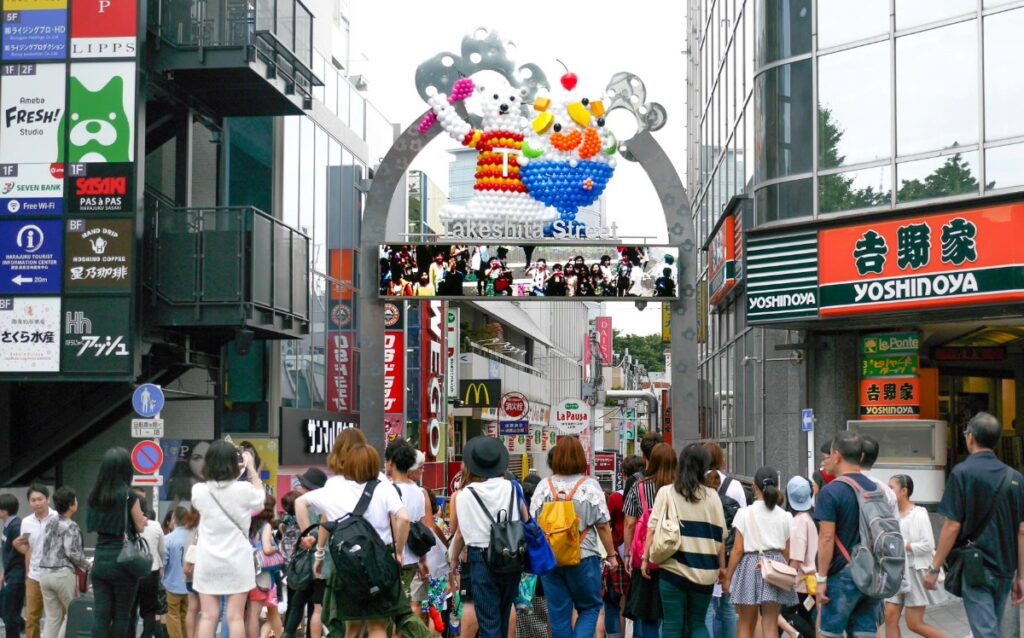
If Harajuku fashion has one physical home base, it’s Takeshita Street. Takeshita-dori, technically. A narrow pedestrian lane, only a few hundred meters long, jammed with boutiques, crepe stands, candy shops, photo booths. For decades this was the actual engine room, the spot where kids gathered, especially during those old pedestrian-zone Sundays, to show off handmade, elaborate outfits.
The street’s still there. Still packed, honestly. But what it’s actually for has shifted. It leans a lot more tourist- and fast-fashion-oriented now than it did back during the FRUiTS-documented peak, and foreign visitors make up a huge chunk of the daily foot traffic these days. That said, the creative spirit hasn’t disappeared. It just moved. Into dedicated communities, specific events, online spaces, places where the older subcultures stay genuinely alive instead of turning into museum exhibits.
Harajuku Fashion and Kawaii Culture
Kawaii, meaning cute, is probably the emotional core running through most of Harajuku’s history. Even in subcultures that don’t read as conventionally cute at all. As an actual fashion movement, kawaii emerged in Harajuku in the late 1970s and early 1980s, when young Japanese women started rejecting the buttoned-up office-lady dressing expected of them for something more childlike and expressive instead.
That wasn’t just a style preference back then. Oversized bows, lacy collars, pastel colors, Sanrio character accessories, all of it worked as a quiet act of resistance in a culture that generally rewarded fitting in over standing out. Kawaii’s changed a lot since. It rarely shows up purely childlike anymore, and it’s more commonly blended with Y2K influences, genderless silhouettes, or minimalist styling that’s honestly a lot easier to actually wear day to day than the full maximalist kawaii of the early 2000s ever was.
The Major Harajuku Subcultures
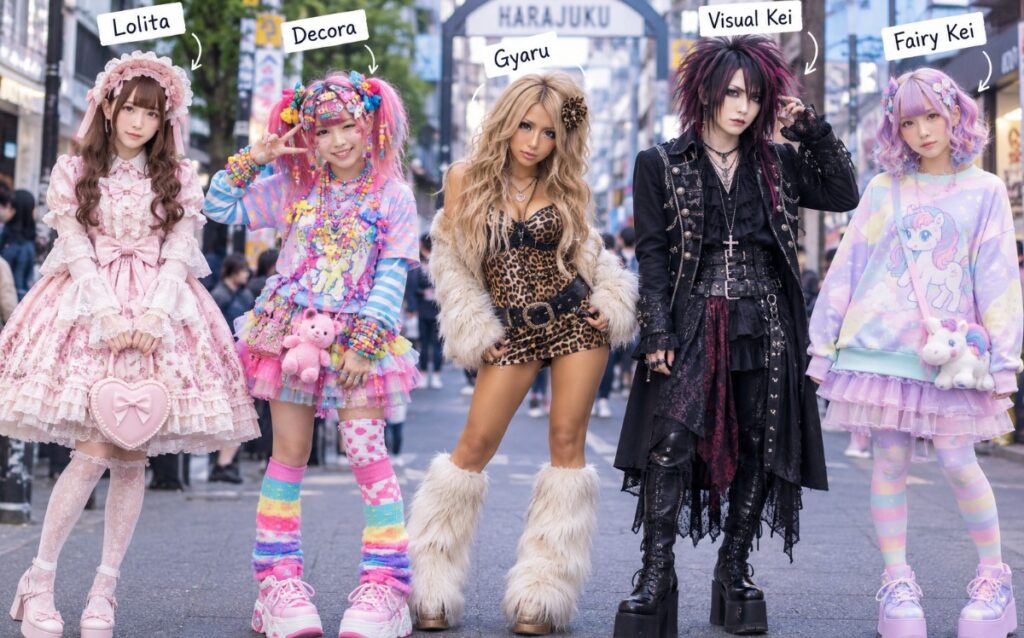
Lolita fashion is probably the most recognizable Harajuku style to anyone outside Japan. Elaborate, doll-like silhouette. Knee-length skirts, petticoats for volume, lace, Victorian or Rococo-leaning detail. It splits into branches, Gothic Lolita going dark and dramatic, sweet Lolita going pastel and storybook, but the core shape stays pretty consistent across all of them. It’s become one of the most globally recognized symbols of kawaii as a whole, with dedicated communities keeping it going well outside Japan at this point.
Decora fashion is controlled chaos, and I mean that as a genuine compliment. Layered plastic accessories in candy colors, stacks of hair clips, toy jewelry, enough charms and pins to actually rattle a bit when you walk. The idea is more-is-more. No single piece is supposed to stand out on its own. The sheer volume of accessories is the whole statement.
Gyaru took its name from “gal,” by way of a jeans brand called Gurls, and it broke from the rest of Harajuku in a specific direction. Heavy tanning, dramatically lightened or bleached hair, bold makeup built around big eyes. Where a lot of Harajuku subcultures play with youth and cuteness, Gyaru was more of a direct pushback against traditional Japanese beauty standards around pale skin and understated makeup. There are plenty of sub-branches too, everything from Hime Gyaru’s princess glamour to darker, edgier variations.
Visual Kei grew straight out of Japan’s rock and music scene rather than street fashion on its own, and honestly it shows. Androgynous, theatrical, unmistakably built for a stage. Dramatic makeup, big hair, military-inspired coats, leather, lace, sometimes all of it layered at once. Less an outfit than an actual persona. It’s carried that rock-star, gender-fluid energy since its earliest days in Japan’s visual-focused music culture.
Fairy Kei is basically Decora’s quieter cousin. Same Harajuku roots, same love of nostalgic accessories, just turned way down in volume. Built around 1980s Western children’s pop culture, My Little Pony, Care Bears, Rainbow Brite, filtered through a kawaii lens and rendered in soft, muted pastels, baby pink, lavender, mint, pale yellow. The style’s defined more by color than by any single garment, and it traces back to a Harajuku vintage shop called Spank! in the mid-2000s, which sold original 1980s Western toys and clothing and basically gave the whole aesthetic its name. Singer Kyary Pamyu Pamyu later pushed pastel Harajuku styling into much wider international view starting around 2010.
Harajuku-Inspired Outfits for Women
You don’t need to go full Gothic Lolita or Decora to borrow from any of this. A pretty workable starting point: pair a pastel or graphic top with a fuller skirt and platform sneakers, leaning toward Fairy Kei’s softer palette rather than Decora’s full accessory pile-up. Layering does a lot of the heavy lifting here. A slip dress over a fitted tee. Tights under a skirt. A cardigan or jacket left open over something bolder underneath.
For something bigger, try mixing prints and textures within one color family, all pastels, say, or all black-and-white. That keeps things feeling deliberately styled instead of just chaotic. And accessories genuinely carry a lot of this aesthetic on their own. A few statement hair clips, a charm-covered bag, layered jewelry, any of it can shift an otherwise ordinary outfit into something clearly Harajuku-coded without you needing a full subculture wardrobe behind it.
Harajuku-Inspired Outfits for Men
Men’s Harajuku style pulls more from Visual Kei’s androgynous rock edge, and from the neighborhood’s broader streetwear scene, than from Lolita or Decora specifically. A decent starting combo would be an oversized graphic tee or band shirt under an open jacket, slim or wide-leg trousers depending on the silhouette you want, boots or chunky sneakers to close it out.
Layering black pieces in different textures, leather, lace, denim, is a reliable way to nod at Visual Kei without going full stage costume on a random weeknight. On the more casual streetwear end, oversized fits, bold graphics, and a mix of vintage and designer pieces reflect how Harajuku’s Ura-Harajuku backstreets have genuinely fed into global menswear labels. BAPE and Undercover included.
Essential Clothing Pieces
A handful of items keep showing up across nearly every Harajuku subculture, even though how they’re actually worn varies wildly from one to the next. Platform shoes and boots are close to a constant, adding height and drama no matter which substyle you’re working within. Layered skirts, whether that’s Lolita’s petticoat volume or a simpler tiered mini, run through most of the more feminine-leaning styles. Graphic and character-print tees cross over into basically every substyle in some form. And oversized outerwear, jackets, cardigans, coats, gives most looks room to layer accessories and texture instead of the whole thing collapsing into something flat.
Accessories and Layering
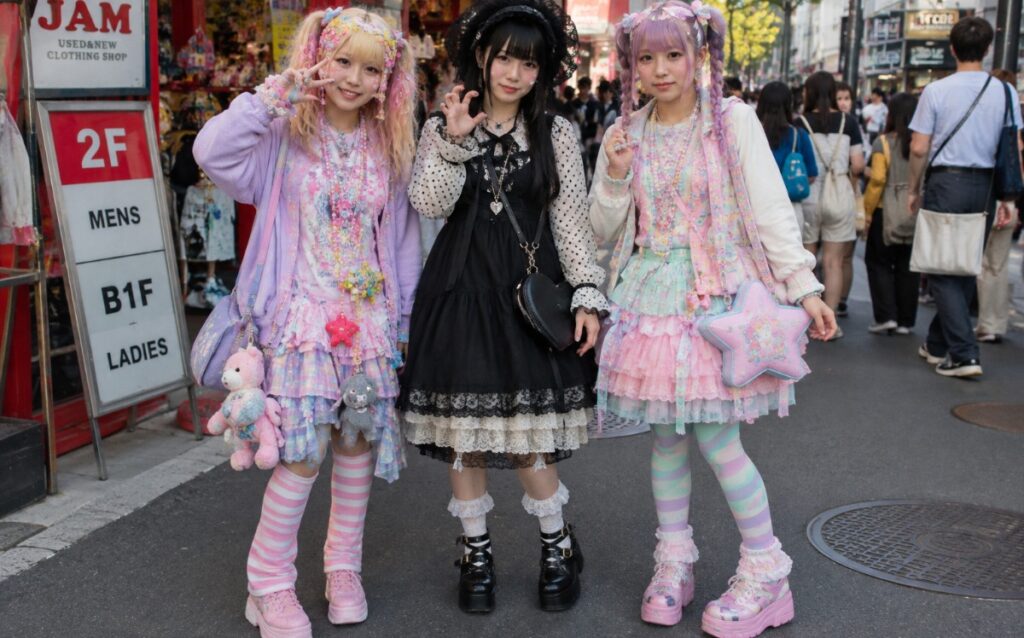
Accessories aren’t an afterthought here. They’re often the actual point. Decora especially treats accessories as the main event rather than a finishing touch, dozens of clips and pins and charms piled on at once. Even in quieter substyles like Fairy Kei, small cute details spread across the whole outfit rather than sitting in one obvious statement piece.
Layering works the same way. Clothes get built up in visible strata, a slip under a dress, a cardigan over a top, tights under a skirt, each layer adding texture instead of getting buried under the next one. That layered, additive approach is honestly one of the more useful things to steal from Harajuku fashion in general. Works fine even in outfits that aren’t referencing any specific subculture at all.
How to Wear Harajuku Fashion in a Modern Wardrobe
The easiest way in is picking one Harajuku-coded element instead of attempting a full subculture look from scratch. A statement hair accessory. One graphic piece. A bold color choice against otherwise simple, modern basics. That reads as genuinely stylish rather than costume-y. Full immersion into something like Lolita or Decora takes real commitment, specific silhouettes, specific accessories, an actual learning curve, so it’s worth treating that as its own deliberate decision rather than something to half-attempt on a random Tuesday.
Mixing eras and genres, which is basically what current Harajuku street style is doing anyway, is a genuinely useful approach for anyone outside Tokyo too. A vintage piece next to something contemporary. A pastel color against an otherwise neutral outfit. Either one captures the individuality this whole movement is built on without you needing a complete subcultural wardrobe. And since Harajuku’s own philosophy has always leaned DIY, modifying pieces yourself, adding pins, patches, whatever layering makes sense to you, fits the spirit a lot better than buying something pre-labeled “Harajuku style” off a rack somewhere.
Harajuku Fashion vs. Japanese Streetwear
Worth drawing a real line here, since these two get lumped together constantly and honestly it’s a little annoying. Harajuku fashion in its classic sense, Lolita, Decora, Gyaru, Visual Kei, is subcultural. Built around specific rules, specific communities, often a genuine stance against conventional dress. Japanese streetwear more broadly, the stuff tied to labels like BAPE and Undercover and the shops scattered through Ura-Harajuku and Cat Street, runs a lot closer to global fashion norms. Seasonal drops. Brand collabs. Resale markets.
The two overlap heavily in the actual physical geography, and streetwear’s absorbed real DNA from the subcultures around it, oversized silhouettes, bold graphics, an anime-adjacent visual language running through a lot of it. But streetwear generally isn’t built around the same elaborate, rule-bound construction that defines something like Lolita. Related branch, sure. Not really the same thing at all.
How Relevant Is Harajuku Fashion Today
Quieter than its mid-2000s peak, but genuinely still alive. Just spread out differently than it used to be. Physically, Takeshita Street stays busy, with international tourists now making up a huge share of daily foot traffic as Japan’s post-pandemic tourism boom has pushed the whole neighborhood back into global attention. You’ll still spot Lolita dresses, Decora accessories, gothic styling around the area. Just in smaller numbers relative to the crowd than during the district’s documented peak.
Online is really where a lot of the current energy actually lives now, if we’re being honest. Newer offshoots like yume kawaii and jirai kei have grown directly out of the older Harajuku family, and nostalgia for 1990s and 2000s Harajuku has picked up real steam on platforms like TikTok, where the name increasingly works as a catch-all style label that isn’t always tied to the actual physical neighborhood anymore. That nostalgia also overlaps with the comeback of Y2K fashion. Meanwhile the influence has moved upward too.
Harajuku-inspired collections have shown up at Tokyo and Paris Fashion Week, and luxury houses have tested colorful, stacked silhouettes that would look completely at home on Takeshita Street.
That mix, a still-active physical scene, a genuinely thriving online community, real influence reaching into both streetwear and high fashion, is probably the best answer to whether Harajuku still matters. It’s not the same neighborhood FRUiTS was photographing in 1997. But the core instinct behind it, get dressed exactly how you want without asking anyone first, is arguably more widespread now than it’s ever been.
Final Thoughts
Harajuku fashion was never really about one look. The deeper you dig into the actual history, the clearer that gets. It’s a decades-long tradition of kids in one small Tokyo neighborhood building entire visual languages out of rebellion, nostalgia, and pure creative excess, then watching those languages ripple out across the rest of the world. The street looks different than it did at its documented peak, quieter in some ways, busier with tourists in others, but the instinct underneath Lolita, Decora, Gyaru, and everything else on this list hasn’t really gone anywhere. It just found new places to live.
